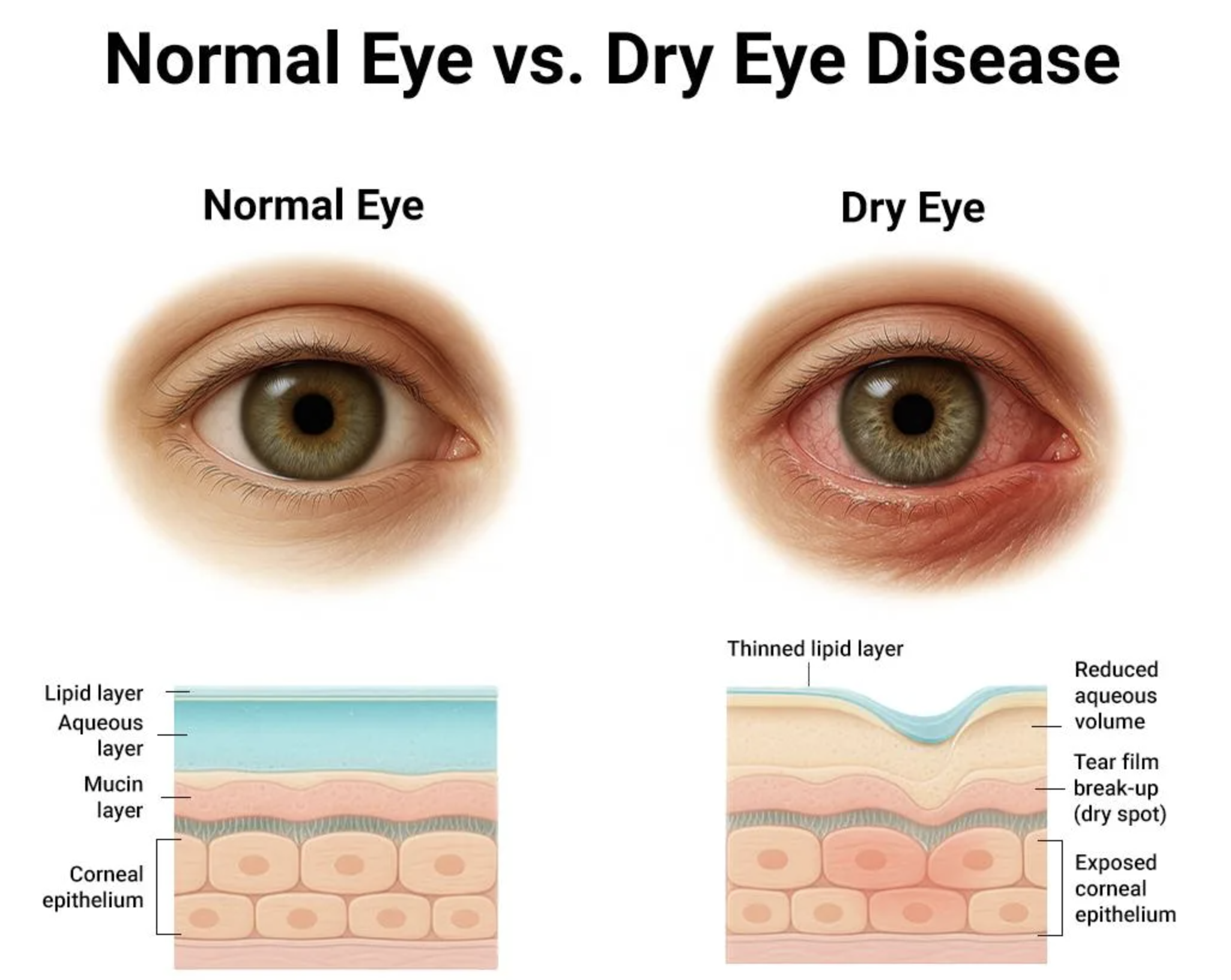
Dry eye is a common condition that can affect comfort, vision quality, screen tolerance, contact lens use, and recovery after eye procedures. Treatment works best when the underlying cause is identified rather than relying only on general eye drops.
What is Dry Eye Syndrome?
Dry eye syndrome happens when the tear film does not keep the eye surface comfortable and stable. This can occur because the eyes do not make enough tears, tears evaporate too quickly, eyelid oil glands are not working well, or inflammation affects the ocular surface.
Assessment and Diagnosis of Your Dry Eye Symptoms
Assessment may include discussion of symptoms, screen habits, medications, allergies, contact lens use, previous eye surgery, eyelid health, tear film stability, and eye surface staining. The aim is to understand whether dryness, inflammation, eyelid gland dysfunction, or another eye condition is driving the symptoms.
Treatments to Reduce or Eliminate Your Dry Eye Symptoms
Treatment may include preservative-free lubricating drops, lid hygiene, warm compresses, environmental changes, screen-habit adjustments, anti-inflammatory eye drops, allergy management, treatment of eyelid gland dysfunction, or referral for additional procedures when needed.
When dry eye treatment may be considered
- Burning, stinging, gritty, or foreign-body sensation
- Redness, tearing, light sensitivity, or fluctuating vision
- Symptoms that worsen with screens, reading, driving, wind, or air conditioning
- Dryness before or after LASIK, LASEK, cataract surgery, or contact lens use
Visit notes
- Bring a list of current eye drops, medications, allergies, and contact lens details
- Tell the doctor if symptoms change during the day or worsen with screens
- Some treatments need several weeks of regular use before improvement is clear
- Dry eye may need ongoing maintenance rather than a one-time treatment
Common patient questions about dry eye treatment
Why do my eyes water if I have dry eye?
Dry eye can irritate the eye surface and trigger reflex tearing. These watery tears may not have the right quality to keep the surface stable, so the eyes can feel dry and watery at the same time.
Can dry eye affect vision?
Yes. An unstable tear film can cause fluctuating or blurred vision, especially during reading, screen use, or driving. Vision may clear briefly after blinking or using lubricating drops.
Is dry eye treatment the same for everyone?
No. Treatment depends on whether the main issue is tear deficiency, fast evaporation, eyelid gland dysfunction, inflammation, allergy, medication effects, or another eye condition.